

BRI Care Consultation™

Evidence-based Care Navigation program assures comprehensive support for family caregivers and older adults
Proven Care Navigation program delivers person-centered support

Evidence-based BRI Care Consultation is a comprehensive Care Navigation program trusted by hundreds of organizations over the past 15 years to provide effective, customized support to family caregivers and older adults with dementia or other chronic conditions.

The program delivers person-centered care by addressing 35 different areas of potential need for both the caregiver and the person receiving care. Equally important, the program provides a proven framework and built-in protocols that guide effective delivery and assure comprehensive care.

Ultra-flexible and versatile, BRI Care Consultation is delivered by phone and email, making it ideal for busy caregivers. And because it’s delivered remotely, it’s well suited for densely populated and rural areas alike.

Tailored solutions address virtually any need

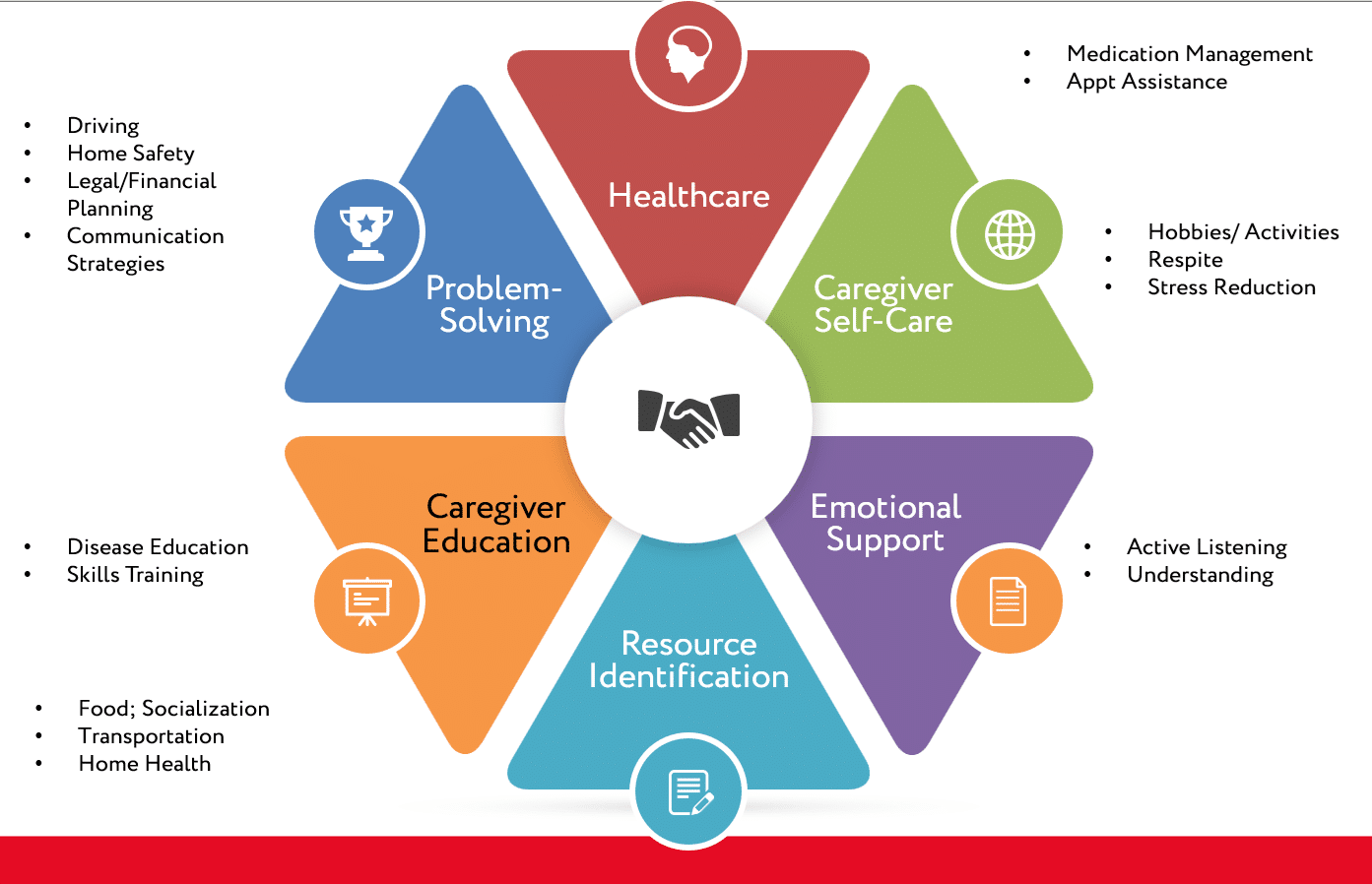
An important element of this powerful program is that it addresses the needs of both the caregiver and the older adult receiving care. Care Navigation addresses the physical, emotional and behavioral needs of the care team by helping to arrange services, identify needed resources, provide connections to financial and legal guidance, understand disease progression, manage aggressive or depressive behaviors, and much more.

The program also addresses the self-care needs of the family caregiver, incorporating respite time, hobbies, medical appointments and stress-relieving activities directly into the care plan.

Community Care Navigation Delivers Comprehensive Support
Learn more about Care Navigation

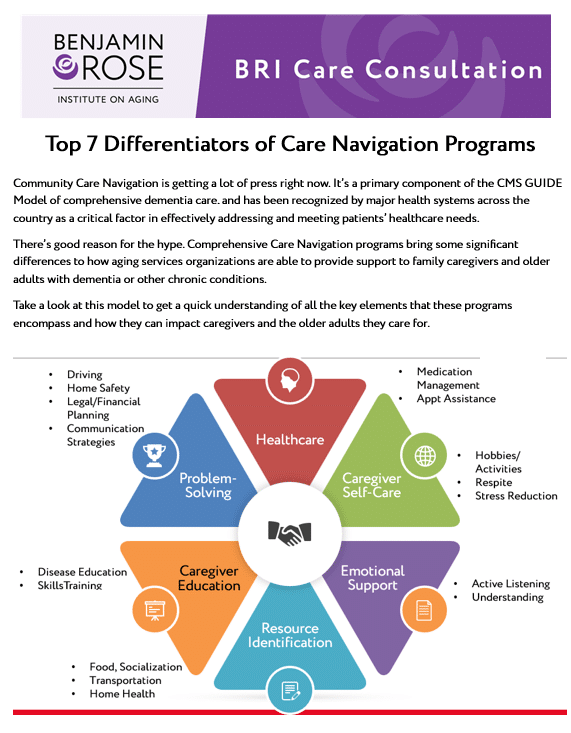
How is Care Navigation different from traditional caregiver support programs, and why are health systems and community-based organizations so intrigued? Download the 7 Top differentiators of Care Navigation. By filling out the below form.

Secure online platform drives program delivery

The Care Consultation Information System (CCIS) is a secure, intuitive web-based tool that guides trained Care Navigators throughout program delivery. It allows Care navigators to assess and record issues for caregivers and care receivers, easily monitor and update care plans, and follow a defined schedule of ongoing contact.


Two delivery models to meet your organization’s needs

BRI Care Consultation can be licensed by your organization and delivered by specially trained Community Care Navigators on your staff, or Benjamin Rose Institute on Aging can deliver the program to your clients on your behalf through our service delivery arm, WeCare. . . Because You Do.

Licensed Model:

  • We provide your staff with initial and ongoing training, technical support and consultation
  • You receive marketing tools and ongoing support
  • You receive access to the Care Consultant Information System (CCIS) to guide the program, reporting and built-in monitoring process

WeCare Delivery Model:

  • We deliver the proven-effective program to the families you serve
  • There is no time or training required of your staff
  • You get immediate program availability for your clients, low upfront expenses and a flexible payment structure

Evidence-based program provides meaningful support for caregivers

This evidence-based family caregiver support program, proven in 12 research studies over 20-plus years to reduce feelings of depression, isolation and relationship strain in caregivers and care receivers.

Community care navigation has been shown in multiple research studies to significantly reduce Emergency Room visits, hospitalizations and physician office visits.

Have questions?

For more information on BRI Care Consultation, please email [email protected] or call 216-373-1662.

Need tech support or assistance with training or user activation? Click this link to our support form to describe your issue, and we will follow up with you as soon as we can!
Fill out my online form.

The “BPC Approved” badge is given to dementia caregiving programs that pass strict criteria for inclusion in Best Practice Caregiving, a database of the top dementia caregiving programs in the U.S. 

BRI Care Consultation™ Licensed Sites

Amazing Place Houston

3735 Drexel Drive Houston, TX 77027 (Directions)

Atlanta Regional Commission

40 Courtland Street Northeast Atlanta, GA 30303 (Directions)

Coastal Region Commission of Georgia

1181 Coastal Dr SW, Darien, GA 31305 (Directions)

Eldercare Services Institute, LLC, Benjamin Rose

11890 Fairhill Road Cleveland, Ohio 44120 (Directions)

Fox Valley Memory Project

1800 Appleton Rd., Menasha, WI 54952 (Directions)

Iona Senior Services

4125 Albemarle St NW Washington, DC 20016 (Directions)

Jewish Family Services of MetroWest

256 Columbia Turnpike Florham Park, NJ 07932 (Directions)

Legacy Link Area Agency on Aging

4080 Mundy Mill Road Oakwood, GA 30566 (Directions)

LifeTime Resources

13091 Benedict Dr, Dillsboro, IN 47018 (Directions)

Lower Rio Grande Valley Development Council

301 W Railroad St, Weslaco, TX 78596 (Directions)

MemoryLane Care Services

2500 North Reynolds Road Toledo, Ohio 43615 (Directions)

My Memory Matters

117 William Hilton Parkway Hilton Head Island, SC 29926 (Directions)

O’Neill Center

333 4th St, Marietta, OH 45750 (Directions)

OPICA

11759 Missouri Avenue Los Angeles, California 90025 (Directions)

Riverside County Office on Aging

6296 River Crest Drive Riverside, CA 92507 (Directions)

Sewickley YMCA

625 Blackburn Rd., Sewickley, PA 15143 (Directions)

Summit County Public Health

1867 W. Market Street, Akron, OH 44313 (Directions)

Tejas Next Health

890 E Travis St, La Grange, TX 78945 (Directions)

University of Louisville Trager Institute

204 E Market St A, Louisville, KY 40202 (Directions)

Upper Peninsula Commission for Area Progress

2501 14th Avenue South Escanaba, Michigan 49829 (Directions)

Western Reserve Area Agency on Aging

925 Euclid Avenue, Suite 600 Cleveland, OH 44115 (Directions)

Frequently Asked Questions

What is Comprehensive Dementia Care?

Comprehensive dementia care is a coordinated, person-centered approach that addresses not only memory and thinking changes, but also the person’s physical health, emotional well-being, daily functioning, safety and support for caregivers. It typically evolves as dementia progresses.

What are the non-medical, community-based elements of comprehensive dementia care?

There are many aspects of comprehensive dementia care that are traditionally not provided through a medical facility and do not require medical personnel to initiate. These include:

Social and community services: Adult day programs, home health services, meals and transportation assistance, memory care programs

Individualized care planning: A personalized care plan based on the person’s needs, preferences, values, and goals

Management of behavioral and psychological symptoms: Strategies for agitation, anxiety, depression, hallucinations, wandering, or sleep problems

Functional support: Assistance needed withbathing, dressing, eating, as well as medication and financial management

Safety planning: Home safety evaluation, fall prevention, wandering prevention strategies

Caregiver support: Education about dementia and disease progression, training in caregiving techniques, emotional support and counseling, respite care options, support groups 

Care coordination: Communication among primary care providers, specialists, therapists, pharmacists, social workers, and community services, assistance navigating healthcare and long-term care systems

Why are community-based, non-medical dementia care programs becoming more widespread now?

When implemented well, comprehensive dementia care can improve quality of life for the person with dementia, reduce behavioral symptoms and caregiver stress, help people remain safely at home longer when appropriate. Additionally, it can reduce avoidable emergency department visits and hospitalizations, and improve coordination across healthcare providers.

For these reasons, many healthcare systems and insurers now offer structured comprehensive dementia care programs that include ongoing care coordination, caregiver education, regular follow-up, and access to community resources, rather than focusing only on office visits or medication management.

What are the community-based services called that provide caregiver and care receiver support?

Many organizations utilize what are called Care Navigation or Care Coordination programs. These are comprehensive caregiver support programs that provide guidance, education, skills training and community resources to family members caring for a loved one. Some also incorporate strategies to encourage physical, emotional and social self-care for the caregiver, too.

Evidence-based care navigation program BRI Care Consultation, for example, maintains a framework that addresses 35 areas of potential need, with 11 of them directed toward caregiver well-being.   

Why is a comprehensive Care Navigation program important?

Care Navigation programs provide the structure and framework to deliver comprehensive dementia care apart from medical considerations. Evidence-based BRI Care Consultation, for example, is a proven program in which highly-trained Care Navigators work with family caregivers to address 35 potential physical, social and emotional issues, develop an individualized care plan, and guide the care partners toward lasting solutions.

Where can families facing dementia go to receive services?

Families can find programs and resources offered through a variety of organizations. They can begin by reaching out to their state’s Department on Aging, and their local Area Agency on Aging. Those resources should be able to either provide programming or direct them to service providers. They can also contact their local chapter of the Alzheimer’s Association for guidance.

Family caregivers can also visit Best Programs for Caregiving (bpc.caregiver.org), a free national directory of proven dementia support programs. By searching on their zip code they can find programs that are offered locally, or nationally available online or by telephone. 

What are the medical components of comprehensive care for people living with dementia?

Comprehensive assessment: Evaluation of memory, thinking, language, and problem-solving, review of medical history and medications, a physical and neurological examination and assessment of mood, behavior, sleep, nutrition, and mobility.  

Medical management: Diagnosis and staging of dementia, treatment of reversible causes of cognitive decline when possible, management of chronic conditions such as diabetes, heart disease, or hypertension, appropriate use and monitoring of dementia medications, if indicated.

Why is it important to diagnose dementia early?

There are a number of medications and treatments available today that can slow the progress of symptoms when caught early, as well as clinical trials for new treatments that may be shown to have positive results.

Additionally, evidence-based programs like SHARE for Dementia are available for individuals with early- to moderate-stage dementia and their primary caregivers to help them plan for the future. This provides the person with dementia a voice in their future care, and the caregiver a realistic, practical care plan to reduce future stress and undue burden.   

What is personalized care planning?

The personalized care plan is based on the person’s needs, preferences, values, and goals. Advance care and planning are vital to truly understanding the wishes of the person with dementia. Even without pre-planning, the care plan takes into account current needs of the care partners and structures needed tasks and activities to be accomplished into a comprehensive planning document.

How does comprehensive care incorporate management of behavioral and psychological symptoms?

Care Navigators provide strategies for managing agitation, anxiety, depression, hallucinations, wandering, and sleep problems. Emphasis is typically placed on non-drug approaches before medications. Educating caregivers to recognize triggers and respond effectively is also an important technique.  

How does comprehensive dementia care affect the daily life of the caregiver?

Care Navigators work with family caregivers to understand the challenges the person with dementia has performing the “activities of daily living,” such as bathing, dressing and eating.As needed, caregivers can participate in in-person or virtual training classes to improve their ability to help their loved one perform these tasks. There may be instances where occupational, physical or speech therapy may be beneficial to consider, as well.

How does Care Navigation help relieve caregiver stress and burden?

In a comprehensive care navigation program, the Care Navigator is also responsible for promoting self-care for the family caregiver. Self-care can take many forms, including respite time to relax and recharge, stress-relieving techniques like yoga and mindfulness, managing physical health, and participating in support groups. 

What does dementia care look like in the early stages of the condition?

Comprehensive dementia care evolves as a person’s symptoms and needs change. Early in the disease, care often focuses on confirming the diagnosis, identifying treatable contributors to cognitive changes, managing medications and other health conditions, maintaining independence, and establishing legal, financial, and advance-care plans.

What does care involve during the middle stages of dementia or Alzheimer’s?

As dementia progresses, the focus shifts toward supporting daily activities, preventing falls and other safety concerns, managing behavioral or psychological symptoms, addressing nutrition and sleep, and providing increasing support for caregivers. Care plans are regularly reassessed so that treatments and services remain appropriate.

What is involved in later-stage dementia care?

In the later stages, care generally emphasizes comfort, dignity, symptom relief, prevention of complications, and assistance with basic needs such as eating, bathing, mobility, and communication. Families may also receive guidance about home care, skilled nursing or residential care, and hospice or palliative care when appropriate.

What functional supports should a dementia care plan include?

Programming should include an assessment of the ability to perform activities of daily living (bathing, dressing, eating), providing caregiver skills training, or assistance in identifying other resources to help. Functional support also includes help with managing medications, finances, shopping, and transportation.

How is home safety addressed?

An initial home safety evaluation is a good start in assessing needed changes in the living environment. Fall prevention techniques should be implemented, as well as an emergency preparedness plan. As the disease progresses, wandering prevention strategies often come into play.

What are the expected outcomes of implementing comprehensive dementia care?

When implemented well, comprehensive dementia care can improve quality of life for the person with dementia, reduce behavioral symptoms and caregiver stress, help people remain safely at home longer when appropriate. Additionally, it can reduce avoidable emergency department visits and hospitalizations and improve coordination across healthcare providers.

For these reasons, many healthcare systems and insurers now offer structured comprehensive dementia care programs that include ongoing care coordination, caregiver education, regular follow-up, and access to community resources, rather than focusing only on office visits or medication management.

How do aging services organizations fund their Care Navigation programs?

Many organizations utilize their Title III funding to support their caregiver initiatives. Grants provided through ACL and other foundations often encourage the inclusion of an evidence-based program within proposals, and many states are now beginning to implement state-wide dementia care programs and provide funding to counties or regions to execute the initiatives. 

What services does the CMS GUIDE Model provide?

The GUIDE Model from the Centers for Medicare and Medicaid is an example of a comprehensive dementia care program. GUIDE includes the medical components of assessment, treatment and medication management, as well as the full complement of community-based services included in Care Navigation. GUIDE was developed to serve as a model for comprehensive dementia care delivered by both health systems and community-based organizations to benefit families facing dementia.